

Have you ever seen TTS in a message comment app or social media post and wondered what it actually means?
You’re not alone. TTS can mean different things depending on the context which is why this short abbreviation can sometimes be confusing.
In technology TTS most commonly means Text to Speech. It refers to technology that converts written text into spoken words.
But online conversations can use abbreviations differently. So, if you’ve come across TTS meaning while texting gaming chatting or using an app the surrounding conversation matters.
Let’s break it down in simple English so you know exactly what TTS means and when people use it. 👇
What Does TTS Mean?
TTS most commonly means “Text-to-Speech.” It is a technology that reads written text aloud using a computer-generated or synthesized voice.
For example, when your phone reads a text message aloud, a navigation app speaks written directions, or a website reads an article to you, text-to-speech technology may be involved.
Featured Definition
TTS means “Text-to-Speech,” a technology that converts written words into spoken audio.
The abbreviation is especially common when people talk about accessibility, smartphones, computers, gaming, streaming, apps, and digital content.
However, context is important because TTS can have other meanings in specific communities or conversations.
TTS Meaning in Simple Words
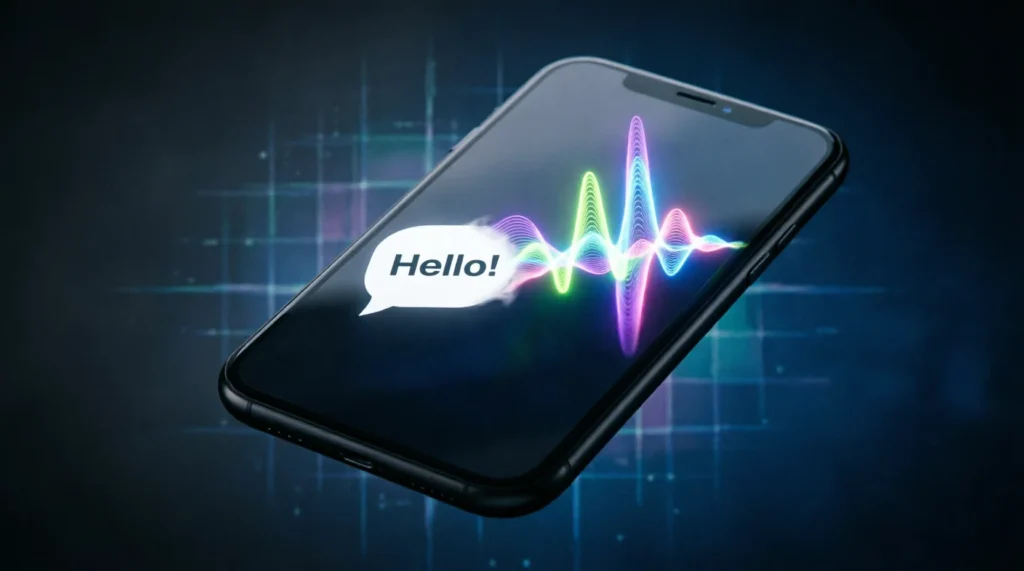
Think of TTS as a computer reading text for you.
Normally, you see:
“Your order has been shipped.”
With TTS, software can turn those written words into something you hear:
“Your order has been shipped.” 🔊
The technology analyzes the text and produces spoken audio.
You may already use TTS without realizing it. Smartphones, computers, smart devices, navigation systems, and many apps can use this technology.
A Simple Example
Imagine you are driving and your navigation app says:
“Turn right in 500 meters.”
The instruction was originally generated from written information, but TTS can convert that text into speech so you can hear it without looking at your screen.
That’s the basic idea behind text-to-speech.
Where Is TTS Used?
TTS appears in many places online and in everyday technology.
Here are some common examples:
📱 Smartphones
Phones can use TTS to read notifications, messages, webpages, and other text aloud.
This can be especially useful when you cannot comfortably look at your screen.
💻 Computers
TTS can read documents, webpages, menus, and other digital text.
Many operating systems include built-in speech or accessibility features.
🎮 Gaming
TTS is also common in gaming.
Some games and gaming platforms can read chat messages aloud, allowing players to hear what others have typed.
🎥 Streaming
Content creators sometimes use TTS voices for videos, livestreams, alerts, or narration.
For example, a streamer may have a system read a viewer’s message aloud during a live broadcast.
♿ Accessibility
One of the most important uses of TTS is accessibility.
People who have difficulty reading text on a screen may use speech technology to access digital information more easily.
TTS can also help people who prefer listening instead of reading.
🚗 Navigation Apps
Navigation systems can convert written directions into spoken instructions.
Instead of constantly checking the screen, you can hear instructions while traveling.
📚 Education
Students can use text-to-speech to listen to digital books, study materials, webpages, or notes.
Listening can sometimes make long blocks of written information easier to process.
Why Do People Use TTS?
There are several reasons someone might use text-to-speech.
1. It Saves Time
Listening to text can be convenient when you are busy.
For example, you might listen to an article while walking instead of sitting down and reading it.
2. It Improves Accessibility
TTS can make digital content easier to access for people with certain visual, reading, or learning needs.
It doesn’t replace every accessibility feature, but it can be a useful option.
3. It Makes Hands-Free Use Easier
You can hear information without constantly interacting with your screen.
This is particularly useful with navigation and voice-enabled devices.
4. It Can Help With Reading
Some people use TTS while following along with written text.
Hearing and seeing the words together can make digital reading more comfortable for some users.
5. It Adds Voice to Digital Content
Creators can use synthesized speech for narration, alerts, gaming content, and other digital experiences.
TTS Meaning in Texting and Social Media
If someone simply sends “TTS” in a chat, don’t automatically assume it means Text-to-Speech.
In technology-related conversations, Text-to-Speech is the standard interpretation.
For example:
Person A: “Can this app read messages aloud?”
Person B: “Yeah, it has TTS.”
Here, TTS clearly means Text-to-Speech.
But abbreviations can develop different meanings in specific online communities.
That’s why you should look at the words around the abbreviation before deciding what someone means.
Real-Life Examples of TTS
Let’s look at a few situations where you might encounter TTS.
Example 1: Accessibility
Person A: “I use TTS when reading long webpages.”
Person B: “That sounds really convenient.”
Meaning: The person uses text-to-speech software to hear written webpages aloud.
Example 2: Gaming
Player A: “How do I turn TTS on for chat?”
Player B: “Check the accessibility settings.”
Meaning: The player is talking about a feature that reads text messages aloud.
Example 3: Streaming
Viewer: “Your stream’s TTS alert just read my message!”
Streamer: “Yep 😂”
Meaning: A text-to-speech system converted the viewer’s written message into spoken audio.
Example 4: Navigation
Driver: “I don’t need to look at the map. TTS gives me the directions.”
Meaning: Spoken navigation instructions are being generated from written directions.
Example 5: Studying
Student: “I listen to my notes with TTS while commuting.”
Meaning: The student uses text-to-speech to turn written study notes into audio.
TTS vs. Similar Terms
| Term | Meaning | What It Does |
|---|---|---|
| TTS | Text-to-Speech | Converts written text into spoken audio |
| STT | Speech-to-Text | Converts spoken words into written text |
| Voice Assistant | Software that responds to voice commands | Can listen, understand, and respond |
| Voice Recognition | Technology that identifies or interprets speech | Processes spoken language |
| Speech Synthesis | Creating artificial speech | Produces human-like spoken audio |
TTS vs. STT
The easiest way to remember the difference is:
TTS: Text → Speech 🔊
STT: Speech → Text 📝
For example, if your phone reads a message aloud, that’s TTS.
If you dictate a message and your phone types your words onto the screen, that’s STT.
These technologies do opposite things, although modern systems can use both together.
When Should You Use “TTS”?
Use TTS when you’re talking about technology that converts written text into spoken language.
For example:
- “Does this app support TTS?”
- “I use TTS for reading articles.”
- “The game has a TTS option for chat.”
- “Turn on TTS in the accessibility settings.”
- “The navigation system uses TTS for directions.”
In casual conversations, you can also write text-to-speech instead of TTS if the other person may not recognize the abbreviation.
When Not to Assume TTS Means Text-to-Speech
If you see TTS in a conversation that has nothing to do with technology, don’t immediately assume the meaning.
Check:
- What are people discussing?
- Is the conversation about an app or device?
- Is it related to gaming?
- Is someone talking about accessibility?
- Is the abbreviation part of a particular community’s slang?
Context solves abbreviation confusion. ✅
Common Misunderstandings About TTS
“TTS Is Only for People With Disabilities”
Not true.
Although accessibility is an important use of TTS, anyone can use it.
People may use text-to-speech for studying, multitasking, entertainment, navigation, content creation, or convenience.
“TTS Is the Same as Voice Recording”
Not exactly.
A voice recording is an actual recording of someone speaking.
TTS generates spoken audio from written text using speech synthesis.
“TTS Always Sounds Like a Robot”
Older synthesized voices could sound noticeably robotic.
Modern TTS systems can produce much more natural-sounding speech, although the quality varies between technologies and voices.
“TTS Only Works on Computers”
No.
TTS can be found across phones, tablets, computers, gaming platforms, websites, navigation systems, and other digital devices.
“TTS and STT Mean the Same Thing”
They don’t.
Remember:
TTS = Text to Speech
STT = Speech to Text
That simple distinction will save you a lot of confusion.
Pro Tips for Understanding TTS 🔥
If you’re unsure what someone means by TTS, use these quick tips.
1. Look at the Context
The surrounding words usually reveal the intended meaning.
“TTS voice,” “TTS settings,” and “TTS reader” strongly suggest Text-to-Speech.
2. Don’t Confuse TTS With STT
Keep this shortcut in mind:
TTS → You type/read text → computer speaks
STT → You speak → computer writes text
3. Consider the Platform
If you see TTS in a gaming, streaming, accessibility, or technology discussion, Text-to-Speech is a likely interpretation.
4. Ask If You’re Still Unsure
There’s nothing wrong with asking:
“What do you mean by TTS?”
A quick question is better than misunderstanding the conversation.
5. Use the Full Term With New Audiences
If you’re writing for people who may not know the abbreviation, write:
Text-to-Speech (TTS)
After that, you can simply use TTS.
Is TTS Slang?
Usually, no.
TTS is primarily a technical abbreviation, not traditional internet slang.
You’ll often see it in technical discussions, apps, gaming, accessibility settings, streaming, and digital communication.
That said, online communities sometimes give abbreviations additional meanings. So the exact interpretation can depend on the conversation.
Why Is TTS So Common Online?
Digital communication produces huge amounts of written content.
TTS provides a bridge between written information and spoken communication.
Instead of reading everything yourself, you can sometimes listen to it.
That’s useful for accessibility, convenience, entertainment, multitasking, and hands-free experiences.
This is why you may encounter the term in many different digital environments.
Frequently Asked Questions
What does TTS stand for?
TTS usually stands for “Text-to-Speech.” It describes technology that converts written text into spoken audio.
What does TTS mean in texting?
In a technology-related texting conversation, TTS usually means Text-to-Speech. However, abbreviations can have different meanings in specific communities, so context matters.
What is an example of TTS?
When your phone or computer reads a written message, webpage, or notification aloud, that is an example of Text-to-Speech.
What is the difference between TTS and STT?
TTS converts text into speech, while STT (Speech-to-Text) converts spoken language into written text.
Final Thoughts:
So what does TTS mean
In most technology related conversations, TTS means Text to Speech. It is technology that converts written text into spoken audio.
You may encounter TTS on smartphones computers games streaming platforms navigation systems accessibility tools and educational apps.
Discover more post:
| https://meanzpath.com/era-meaning/ |
| https://meanzpath.com/sdiybt-meaning/ |
| https://meanzpath.com/what-does-loml-mean/ |
| https://meanzpath.com/what-does-mhm-mean/ |
